Translate

Showing posts with label Beach. Show all posts

Monday, 2 January 2023

Travel Resolution for 2023: Stop Flying

 Realistically, it was time to stop flying a long time ago. It just took a pandemic to show us that we didn’t need to fly, and physically seeing the bleached coral off Thailand that made us realise that we really shouldn’t fly. In the past we’d justified our excessive travel with the idea that it was good for the children to experience other cultures, and our geographically diverse family required a certain amount of travelling. But these don’t justify our 7 trips to the United States, or indeed any trips outside Hong Kong.

 The first serious lockdown over the spring of 2020 meant that the only travelling we did was walking from our front door, into beautiful countryside that we hadn’t even realised was there. Once we could travel within the UK, a few trips by train made us realise that chasing the dream of exotic foreign holidays for years meant that we had missed out on the incredible diversity on our own island.

We had booked a big summer holiday to Sri Lanka and Dubai in the summer of 2020, itself postponed from 2019 after a terror attack in Sri Lanka. Instead we went on an extended family trip to North Yorkshire, camping due to COVID restrictions on gathering indoors, but relived all the fun of multi-generational trips. We spent our wedding anniversary in the hotel where we got married 20 years earlier but had never been back even though it’s less than an hours’ walk from where we still live. We headed to Bath, for no better reason than the fact that we’d never been there, and took huge advantage of “Eat out to Help Out”, a superb subsidy when feeding 3 teenagers. We bubbled with 3 other families to book the entirety of Dartmoor Youth Hostel, instantly removing my long held Northern prejudice that the South of England has no real hills. 

With our eldest child turning 18 in 2021, we’d hoped to do one last big family holiday, but it was of course cancelled along with most international travel that summer. But the UK travel was as varied as 2020. COVID restrictions had meant that our eldest had not visited any prospective universities, so headed up to his first choice of Aberdeen. We took the 7 hour train journey from London, partly due to environmental worries but also to demonstrate that it’s a really long way. However good weather made both the journey and the city quite stunning. We took a family holiday to York; a thoroughly enjoyable trip taking in the Railway Museum, University, City Walls, the Minster, an out of town shopping centre (not my highlight), and the Shambles. We rocked on to visit extended family on the Lincolnshire seaside; wholesome long walks on the beach and in the countryside, and the best bacon in the world. We celebrated our Wedding Anniversary in a luxury London Hotel while London was very light on tourists. Then off to the Peak District for one of our 3 generations trips cycling and walking through the spectacular scenery. 

And so to 2022, the chance to resume travel almost as we had previously known it looked ready to return. China and Hong Kong remained practically off limits in the summer, so we decided that this final big family trip would be to one of our favourite countries: Thailand. We picked a stunning hotel in Koh Samui with a few days visiting friends in Singapore on the way. It was brilliant. Singapore was a great alternative to Hong Kong, lots of buzz, incredible food, and ridiculously safe. And Koh Samui too proved to be the friendly island paradise that we’d remembered from previous trips. 

Perhaps the biggest wake up to us on this trip was a snorkelling expedition off the coast of Koh Samui. We remembered the clarity of the water and the vibrant colours of the corals and fish from previous trips, sights that cannot be compared to any other natural feature. But now it’s just cloudy water. The delicate coral has been bleached and crumbled into powder. The movement of the sea stirs the dead coral into a murky cloud, so the few fish that remain there can barely be seen. Entire ecosystems are being destroyed already, and it’s our fault.

Lurid newsreels of climate disasters make it clear that we can’t ignore the issue. Sure, we can pay to mitigate some of the impact by paying into a carbon offset scheme. But the principle of making a mess and paying someone to clear it up is not a good one. It’s also clear that we are well behind on reducing emissions, we need to be both offsetting AND cutting our own emissions before more of the world looks like the dead corals of Thailand,  and that means less flying.

We had a great final holiday, but was it really worth the cost, either financially or environmentally, particularly after a series of pretty fun UK trips? Climate change is real, and aviation is a major contributor to it. Should we be adding to that purely for our own indulgence? Do we help low-lying islands by supporting the tourism industry, whilst sinking them through adding our bit to rising seas?

We are part of the problem, and we have to take some responsibility for our own actions.  That means that my travel resolutions for 2023 are to cut down massively on flying. We’ll be travelling locally wherever possible, and using trains where we can. Perhaps our pandemic-era travel will become the new normal. 

Monday, 1 July 2019

Boston with a teenager: Reluctant Education


Education, education, education. An old government slogan that applies to many households of school age children. Holidays should be a break, a change of scenery, but it’s always nice to throw in the odd educational experience. For a 16 year old who has just completed mandatory schooling, a solid dose of education was in order - so off we went to Boston to explore the Universities and the story of America’s break from Colonial rule. I was also keen to get the boy into the idea of independent travelling on a budget.

Our AirBnB was a twin room in a shared house in Revere; great value but well away from the tourist sights of the city centres. Revere is a firmly residential area of white clapboard houses adorned with patriotic tributes, sprawling shopping malls, and enormous roads - in short, what some might call the “real” America. The contrast of our small European city home to the suburban American sprawl was evident as we negotiated our way across 6 lane roads to a near deserted sandy beach barely half an hour from downtown Boston.

As is often the case in the United States, public transport difficulties ended up being a theme of the trip. We had installed the MTicket app on my phone to buy transport tickets, but couldn’t work it. However the MBTA Transit App was reasonably reliable, albeit that there weren’t a huge amount of buses to show us. We also downloaded Boston CityMaps, which gave us lots of adverts and a useful map of the subway; and Lyft, but didn’t use it.


We’d booked tours of Harvard and MIT as “prospective students”, which I suppose #1 son is. I’d always thought of him as more of a nerdy MIT type, and figured the tailored tour through his preferred faculties would be jolly interesting. However, whilst the charismatic student showing us round told us dozens of great quirky stories, it was Harvard that really grabbed his attention. The cool shady squares, ancient buildings (by American standards anyway), vast multi-storey library seemed to really inspire him. The bursary system really inspired me - Harvard and MIT give away over $100 million each in tuition fees every year! Harvard even pays for crazy overseas field trips all around the world. But I could see why the boy was inspired, Harvard has no modesty about appointing itself as the world’s most eminent university, and confidently asserts itself as such. The canteen is good (and cheap) too. Boy was inspired to do a bit more work for sixth form - mission accomplished.

A scientific friend had told me that we needed to visit the Science Museum, which contains the world’s largest van der Graff generator. This seemed a good plan for the rain forecast that afternoon. I had images of my own school science lessons when van der Graff generators turned our 1980’s expansive hair into quite an alien form. However this generator was actually developed to demonstrate lightning. You can miss the rest of the museum - this really was the thing. Played out in a purpose built theatre, the audience protected by a vast birdcage-like Faraday cage surrounding the central stage, the show demonstrates a phenomenal range of sound and light effects from the sparks generated. A bizarre highlight was playing Star Wars music through differently tuned generators as sparks flew between them.  The boy is too old to be a thrilled child, too cool to be interested in the Physics, but was as thrilled as I was, and as fascinated as all the other ages in there. 

While the rest of the family basked in the hottest British day ever, the rain in Boston continued the next day, so we invested $63 each in a one day Boston City Pass which gave us free entry to dozens of indoor and outdoor venues across town, including bike hire. This accelerated our tour through the aquarium, Paul Revere’s house, the Prudential Tower to look out across the neat rows of Brownstone Houses towards Fenway Park and the hills beyond, across Harvard Bridge (curiously measured in “Smoots” by some amusing co-MIT students of the diminutive Mr Smoot who was used as a measuring rod for the occasion),

The unexpected highlight was the museum of Contemporary Art (MCA). Neither of us are artists, or remotely appreciative of art. I find Modern Art to be a very hit and miss affair, sometimes we’ll see something that we really like, but have no idea why. And so it was in the MCA, in the form of a permanent exhibit in a large room with various immense screens showing films taken simultaneously in a large house, in which people are jointly playing a piece of music in a weird range of locations within the house, various states of dress and undress, obviously different instruments and singers, but with the music perfectly synchronised. Walking round the gallery is like walking round this old house with the music all around you. We stayed there a while soaking it all in.

Next day the rain had gone and a beautiful clear day dawned. Following some basic research of Public transport, we plotted a trip Northward to Rockport.  This took us through absolutely stunning scenery with names utterly incompatible with their British namesakes. Manchester had huge clear blue lakes on both sides of the train tracks, lined by magnificent houses with vast green lawns reaching down to the shores. Gloucester and Chelsea meanwhile looked more like... well British Manchester really. Rockport itself seemed rather genteel when we arrived. Plenty of Art Galleries lining the main streets attracted the wealthy elderly crowd more than the teenage son and his dad crowd. However we had a jolly tasty seafood lunch, and proceeded on to collect a pair of pre-booked kayaks to paddle out across to some of the islands in Massachusetts Bay. The wildlife was surprisingly abundant, there were areas of big fish jumping out of the water (although I’ve no idea why), and hundreds of birds diving from the rocky shores. We stopped at Stratsmouth Island which was occupied solely by a retired couple who were restoring the lighthouse on the island. It was a fascinating tale, there was no running water or electricity when they arrived, so they had rigged up rainwater traps and solar panels to make the house habitable as a holiday let.

Our final day involved a proper day’s sightseeing, walking Boston’s famous “Freedom Trail” incorporating places of significance in America’s battle to shake off the colonial oppression imposed by the British Government. As Brits, we have a civic duty to express some cynicism about romanticism of some of the stories. It’s really not clear why Paul Revere is revered more than the other chap who  rode another horse through the night to warn of the British Advance. But that aside, the route is well planned, clearly marked for self-navigation with or without an explanatory leaflet, and at around 3 miles on both sides of the river - is easy to walk in half a day looking at the sights. Many visitors overlook the North side of the river, but that’s a shame as the view from Bunker Hill gives some real perspective to the City, and the old dockyard is fascinating. Back on the South side, and as someone who originates from close to Boston, England; it’s surprising to me to see the names of South Lincolnshire villages on street names and gravestones.  We finished the tour in Chinatown, where we ordered some fantastic Dim Sum, familiar tasty Cantonese food in enormous American portions!

The one thing that our One Day City Pass didn’t cover was the Boston Tea Party Museum, so we took ourselves there after lunch. It’s a bit enthusiastic for my muted British tastes, and much too enthusiastic for a self-aware British teenager, but it really is very well put together. All visitors are assigned an identity of a colonial rebel, and start in a protest meeting led by charismatic actors representing some of the heroes of the rebellion. The party then processes out onto a tea clipper and ceremonially dumps the tea into the harbour. The tour guides really were excellent, staying in character but answering any questions thrown at them with a wealth of knowledge of Boston’s history. The escalating rhetoric between the rebels and Crown was well illustrated through “paintings” of King George and Sam Adams having a heated row, their words based on actual correspondence between them. An understandably different slant to that taught in British Schools, and a welcome educational finale to the trip!

Friday, 10 August 2018

Hua Hin with extended family: the Brighton of Thailand?

Thailand has such abundant supplies of perfect beaches, with such a range of high quality and budget accommodation choices adjoining them, that the expectations of visitors tend to be pretty high. We had already enjoyed this level of luxury in Phuket and Kok Samui, so this time were looking for something a little different. Coupled with the fact that we were a party of 11, with an age range in the 8-80 region, but only a few days to spare, we had a slightly unconventional set of requirements. And as a result, we settled on Hua Hin.

Where? Few westerners seemed to have heard of it. Indeed, it’s less picture perfect than the beachy islands and sun-drenched jungle scenery of the more famous resorts. Not many blogs covered it, but those that did were enthusiastic (Would recommend https://livingnomads.com/2017/12/hua-hin-travel-blog/ here). Hua Hin achieved local recognition as a Royal retreat, splendidly documented in Alec Waugh’s “Bangkok”. Not unlike Brighton is to Londoners, Hua Hin is a seaside resort, a fairly easy journey from the capital. It was (and remains)  much loved by the Thai Royal Family, despite being slightly challenged by experiences of Malaria and military coups during their historic stays there.  
Like Bangkok, development hasn’t been kind to Hua Hin. The long beach that attracted the 19th century Kings is now hidden from the main road by a long sprawl of cheap hostels and smarter resorts; supermarkets, street markets, and shopping outlets; the odd school and temple lining the busy dual carriageway. The beach itself suffers from an influx of Jellyfish during the summer rainy season (when we happened to be there). But for all that, it does have a huge amount of character as a chaotic living city. While it lacks the classic stunning perfection of, say, Koh Samui, there is much fun to be had wandering through the markets and food stalls of the town, and living in it rather than viewing as a passive observer. 


Nowhere is this feeling stronger than the weekend Cicada night market. This had the usual selection of touristy knick-knacks, but interspersed with lots of live music, a play taking place in a small amphitheater, entertainment in the form of dogs leaping through hoops of fire. There was interesting shopping too, one stall was selling wooden home-made rubber band powered weaponry carved in the style of machine guns; the multiple elastic bands enabling it to be used like one to! The food market alongside sold a vast range of street food and drink - kebabs, curries, fruit juices, fried insects - no need for a McDonalds run here. A little further along the road is the smaller but no less variable “Grand Market”, running daily through the week and selling the most mind blowing delicious fresh fruit smoothies for pennies. 

Half an hour out of town towards the hills we found the Black Mountain Water Park. Such attractions are always a winner on hot family holidays, even better when low season meant that our family group made up most of the customers that day. Whilst the emptiness was a little eerie, no-one complained about the lack of queues for the 9water slides of varying degrees of size, steepness and downright madness. A separate lake alongside the pools contained a “Wipeout” style obstacle course complete with slippery floating bridges, inflatable climbing walls a trampoline enabling the larger of us to propel the smaller of us into the air by bouncing onto the opposite end of a semi inflated tube. I’m not sure how the facilities would cope in a busier season, but it was great for us in August!


Our final mini family adventure from Hua Hin was an ATV tour starting from a centre surprisingly close to the centre of town. After an initial half hour training and familiarisation session, we were guided into the hills by 2 of their instructors for a ramble through the countryside, and up a mountain to gaze down at the town and the sea. The more memorable part than the view was getting pestered by monkeys keen to extort a bag of nuts bought for the purpose. The instructors were great with the kids, the older ones were able to take turns to drive themselves, while even the little ones got to sort of drive with the instructors still firmly controlling the vehicles. The session finished off with a bonus air rifle shooting session, again with even the younger children having a go. However, they did reluctantly have to stand behind the line when those above 14 began the knife and axe throwing. And then back to our hotel where the more mature members of the group had endured a rather strenuous traditional Thai massage on the beach.

No story of Thailand is complete without mention of food, and the beachfront cafes and restaurants of Hua Hin cannot be missed. Simple decor and basic construction belied the delicious food produced from within. All the curries we tried had coconut milk to both take the edge off the spices and add a real sweetness that most of the kids could enjoy. The range of basic grilled food meant that no-one went hungry, and the prices were fantastic for such a large group. There was atmosphere too; romantic crashing of the waves in the background was drowned out by interesting Karaoke renditions of Western songs (I think).

Thursday, 5 April 2018

Valencia: The most chilled hot city in Spain

Imagine a sunny Spanish city within a couple of hours flight from London, with a beach, a healthy portion of child-friendly culture, including a major football team, and little chance of walking for more than ten minutes without an opportunity to sit outside a cafe enjoying top quality beer, tapas, food or ice-cream as you desire. You may think of Barcelona here, but let’s take away the tourist throngs and flatten the hills so that children and idle parents can cycle around it, and welcome to Valencia.


For a family trip, the vast sandy beach at Valencia is a huge advantage. It’s similar in scale to the little visited beaches down the East Coast of England, but with brighter sunshine and softer sand. Even with the advancing ages of our children (10 and 14 by now, the eldest having been outsourced on a school trip), it’s easy to while away an entire day at the seaside. There was rather a strong wind while we were there, which made frisbee throwing amusingly unpredictable. The sea was pretty cold as it was early in the year, but the air was warm despite the breeze, and the sun was always always in the sky. A row of restaurants line the promenade along the edge of the beach, varying in quality but improving massively a few streets back into the old fishermans’ quarter. Around the corner from the beach lies the slightly faded glamour of the marina that hosted the America’s Cup a few years ago, with the super yachts still worth a wander to see. 


The truly unique and glorious aspect of Valencia with kidsis its river; or more correctly; the space where it’s river used to be. Like most medieval European coastal cities, Valencia’s historic centre is a couple of miles inland, having developed around a port upstream from the sea. However unlike most medieval European coastal cities, the river was drained after a serious flood in the 1950’s, and the river bed turned into a huge park stretching right across town.We hired a four-seater bicycle and pottered up and down the park to see the sights. Through several miles, the wide tract of traffic-free land is the home of a range of outstanding modernist architecture housing concert halls and museums; there are Football pitches, childrens’ playgrounds in a range of styles, shady meadows, cycle tracks and footpaths, lakes and fountains. A particularly inspired playground is themed around Gulliver in Lilliput, made up of an enormous concrete statue of Gulliver tied to the ground, with his coat tails forming a series of slides for the Lilliputian children. 


In a blur it’s the final full day of our extended weekend break, so time to explore the historic city centre. We again rented bikes to potter along, not just along the river bed, but across a network of fully segregated and connected cycle tracks around the city. This gave us a better idea of the general layout, so we the wandered through squares and alleyways of the pedestrianised city centre, dropping into the renowned market for the smells and snacks essential to sustaining a family, quick tick-off of historic sights and a surprising interest from #2 son in a castle that housed the exiled national government during the Spanish Civil war that he had been studying at school and I had vaguely absorbed via Hemingway. Our target, as recommended by a Valencia-based family blogger (https://www.anepiceducation.com/top-23-things-valencia-spain-kids/), was the ancient city gate of Torres de Quart. Well away from the tour groups in the central squares around the cathedral, this heavily fortified gate once guarded the main entrance to the city. It was one of those monuments with a crazily cheap entrance fee, and it’s castle-like construction with thick walls and winding staircases made it a fun excursion for all of us. We seemed to climb up, and up, and up; each level offering progressively more distant views of the squares below, the wider city, and eventually the surrounding hills to one side and sea to the other.


The vista across the flat roofs sprinkled with TV ariels was surprisingly ugly after the prettiness of the city at ground level. The occasional medieval tower poked randomly through the blocks of flats, reminding us that this is primarily a city for people to live in rather than visit. And who wouldn’t want to live in this sunny paradise between mountain and sea? And I think that’s what gives it the edge over Barcelona, less of a  tourist attraction, and more of a living breathing city for its own people. 

Sunday, 28 August 2016

Three generations boys adventure trip III: Northumberland & Cliff Diving


Somewhere between the Brexit Referendum and the election of Donald Trump, I took the boys to jump off a cliff. In the spirit of collective populism, we got 4 of our friends to plunge down into the sea below with us.  What a great summer! 


Like many British National Parks, the scenery of Northumberland is spectacularly beautiful. The slopes of the mountains, at times rolling, at other times harsh; the attractive stone-built towns, the wide sandy beaches, and of course the jagged cliffs plunging dramatically from the mountains to the sea.  But unlike many British National Parks, hardly anyone goes there. We enjoyed vast swathes of mountains and beaches to ourselves. And even more handily, there is a direct train to Alnmouth from London, by far the easiest way to travel with 4 boys and 3 drinking adults. 


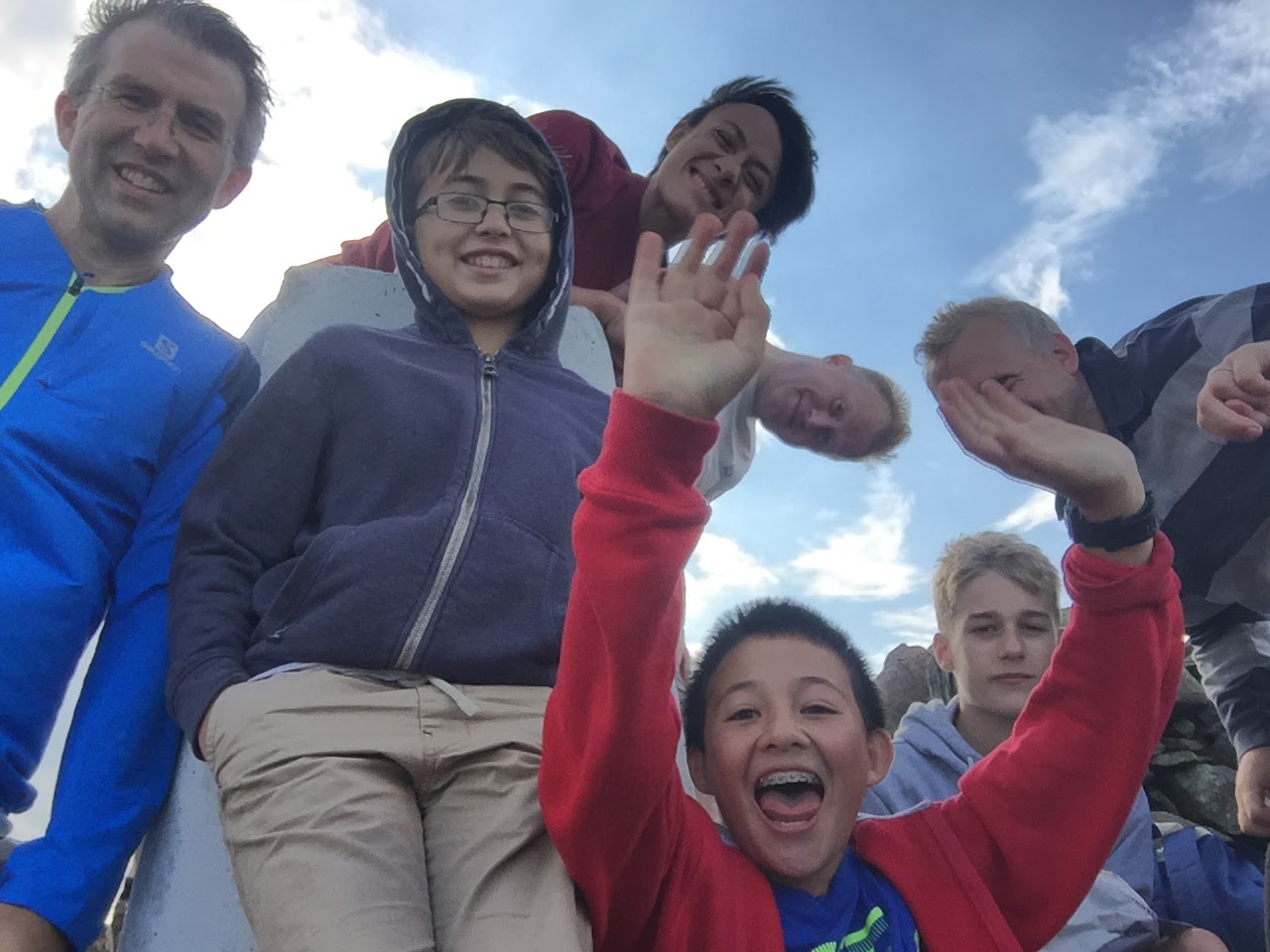
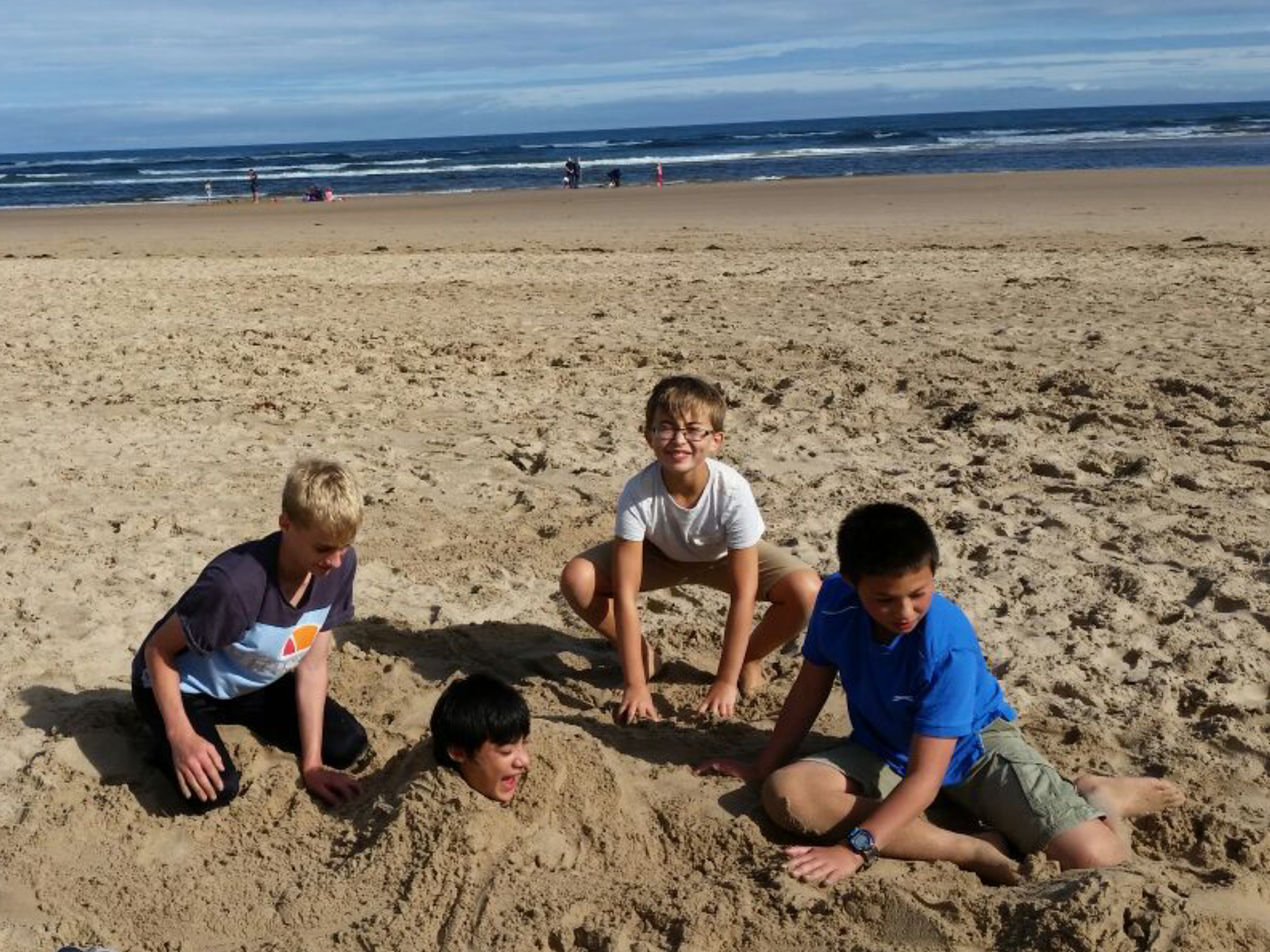
As with Boys Adventure Trip II, we had booked activities with professional guides for most of the weekend. That left a reasonably amount of time amusing ourselves in the mountains and on the beach. Whilst Northumberland has nothing like the number of mountains that the Lake District has, there are a couple of chunky ones in the Cheviots, including the Cheviot itself. Due to time constraints, we climbed its neighbour, the prettily named Hedgehope Hill, close to the Scottish Border. This made it sound like a molehill, but in fact soars to 714 metres - just into mountain territory. The climb is a variety of grass paths, trudging though streams, and the obligatory battling through heather and scrambling over rocks to the top. It was a stunningly bright clear day, as it often is on the East Coast. We were rewarded with spectacular views to the Scottish Highlands one way, and over the rolling hills of Northumberland to the sea in the other direction. After that, we spent the rest of the day having simple fun on the beach. We improvised a version of rounders, there being enough space to really hit and run quite a distance. As the adults became exhausted, the boys buried one another up to the neck in sand. Frankly, there is nothing like a sandy beach in sunshine to amuse children of any age.


We stayed in the Sun Inn in Alnmouth, taking over 3 of their 4 bedrooms. This was a marvellous choice. The en-suite rooms were large and clean, the service was friendly, and the food was fantastic. Every morning several pigs were sacrificed for a wholesome breakfast to start the day. Our evening meals varied between the Sun Inn and an Italian across the road within the Hope & Anchor, both of which were excellent. One evening we ventured into Alnwick, shimmying up another hill first for some more incredible views up and down the coast, before descending back down into the town for a look at the castle and welcome selection of Indian food.


The next morning was a wet one, but it didn't matter too much as we were canoeing along the River Coquet. We had arranged a trip with Adventure Northumberland, who provided us (and another family) with 2 instructors, canoes and wetsuits. We met in the attractive town of Warkworth, close to its castle made famous by being used as the Quiddich pitch in Harry Potter films. After a brief introduction, we were tasked with paddling up over the weir (very hard) and sliding down it again (much easier) before paddling along the scenic river towards the sea. The reaction of our cityish boys was a real surprise. As with our previous canoeing trips, it’s a sport that we can all be equally good or bad at. The changing scenery around each corner and the wild birds flying past and wading in the shallows were all quite fascinating to them. However, just before boredom replaced curiosity, the waterfight began. This is where the instructors really helped, demonstrating a remarkable launch and bat technique with the paddles that thoroughly soaks your opponent!


However the next day we found that there is soaking, and absolute drenching. We met our Adventure Northumberland friends again for a session of “coasteering”, which simply involves making your way along the coast. However the coastal cliffs on this part are rather more dramatic than the beach. The waves really do smash over the rocks, repeatedly washing us into the sea where it's force was concentrated between the rocks. We’d scramble along cliff ledges, before leaping into the water where the ledge expired. Numerous times we paused to sit on what appeared to be a safe rock in the sea, only to get shoved back into the water by another enormous wave! Then bizarrely, we'd crawl through a tunnel in the cliff and find ourselves in a completed secluded lagoon in utter peace. 


Whilst each battle against the waves was adrenalin-lifting in itself, it was the cliff-jumping that was truly terrifying. We began slowly – initially just off a small rock, and gradually jumped off higher ledges as our confidence grew. By the end of the day, the more foolish amongst us were jumping off cliffs taller than a townhouse into jellyfish infested waves below. This took a certain amount of bravado, and I am proud to say that this was the one event where adults did better than the boys. Although as they pointed out – we have less to live for.  A welcoming optimistic view of life from the youth of today!


Tuesday, 9 August 2016

Back to Borneo, Teens and Tweens

When our boys were 2 and 3 years old, we took them to Borneo. I didn't really know much about the place before that, it just sounded a bit crazy and wild. Mainly though, It sounded altogether different from the Centre Parks type holidays that everyone seemed to recommend to us but sounded grim. Logistically it was tricky, we took lots of canned food and first aid stuff together with the bulk of nappies and buggies that all trips with small children require, but the wildlife, the scenery, the adventures - everything screamed at us that we really should return. And so, with the boys now 12 and 14, accompanied by our 9 year old daughter -  we returned.


Borneo is huge in every way. Divided between Malaysia in the North and Indonesia in the South, collectively it is the Worlds third largest island. Almost all the land is concealed beneath vast dense rainforest, cross-crossed by wide rivers and narrow creaks. So much of the wildlife is unique to Borneo, most famously the Orang-Uran, but are also joined by Pygmy Elephants, crocodiles, Hornbills, dozens of types of bats and snakes in this hugely expansive menagerie. The choice of riverside rainforest lodges, traditional local longhouses, river wildlife spotting cruises and overland treks is bewildering. 


The temptation to cram too much into a holiday can be overwhelming. One of most important lessons learnt for a good family holiday is minimising the amount of actual travelling. We had scheduled 10 days in Borneo as part of a 6 week holiday, and as this was supposed to be the rest and relaxation bit - we picked an island resort for our entire stay. This had the downside of eliminating the "big" wildlife, particularly the Orang-Utans, but kept the best of the rest. 


Located a convenient 15 minute boat-ride from Kota-Kinabalu, itself the location of Malaysian Borneo's main international airport, Gaya Island is a stunning island paradise. Surrounded by white sandy beaches and so densely packed with rainforest that passage by vehicle is impossible, it formed a kind of beautiful Greater Borneo in miniature. We stayed in the aptly named Gaya Island Resort, one of a small number of eco-resorts on the island which clung to the hillside by the sea. Despite the buildings all being concealed in the rainforest, they gave up enchanting views across the clear blue sea to Mount Kinabalu in the clouds. 


The resort itself takes its eco-responsibilities seriously, minimising motorised transport around the resort and employing a team of expert naturalists and natural wonders to see. The highlight of this is a small aquarium beside the resort's private beach. This is home to an impressive collection of coral and local tropical fish, but the added benefit of an expert guide with the time to take us all individually through the best bits, in a manner bizarrely presentable to all our ages and levels of knowledge. The aquarium fulfills another critical function of nursing injured turtles back to health before releasing them back into the sea, local fishermen know that this is the place to bring them and several pass through their tanks each season.


The journey to the private beach can be a mini-adventure in itself. For an easy time, the resort offers a speedboat shuttle from the main hotel pier to the beach. However you can also join one of the resort's naturalists for a trek through the rainforest, taking in the fascinating plants and terrifying snakes along the way (we only saw 3 types on our walk, of which only one was deadly, but cobras have been spotted before). The funniest animals were the bearded pigs which exist in quite large numbers around the beach and resort, standing around with their ugly hangdog expressions in this corner of paradise.  They were joined by dozens of extremely mischievous long-tailed macaques taking delight in flinging nuts at the tourists below, definitely the favourite for the children.


We spent one day in Kota Kinabalu, partly for a day out but mainly as a break from the exorbitant costs of dining in the resort. Popularly known as KK, this has been the major administrative centre and gateway to the region since colonial times. Whilst a large part of the town feels like a polluted chaotic dual carriageway, its original backpacker corners and traditional markets still exist and are well worth a visit. It can be challenging (and risky) to encourage children to try local food, which makes it all the more satisfying when you end up having a splendid meal in a local shopping centre for under £1 a head (albeit that we had meet or payment of a McFlurry bribe for pudding).


To me now, I think Borneo has the best of everything for a children's holiday regardless of whether they are 2, or 14, or somewhere in the middle. It's exotic and different, and feels that way with the tropical heat, the incredibly accessible wildlife, and the stunning white beaches and clear blue coral-filled sea. But it's also safe, English is widely spoken, things work. You could spent months exploring the innards of the island, or a week enjoying the surface of it as we did. I'd love to go back, but think next time we will be older and perhaps our children will start their story - "when our parents were 75 and 80 we took them to Borneo".

Tuesday, 12 August 2014

Cannes: French food, sandy beaches, and glamour


I do like France. I know the language well enough to avoid starvation, but badly enough to feel I am somewhere foreign and exotic. You can smell the croissants the moment you leave your apartment to hit the Patisserie-Boulangerie. Provence has the added benefits of a splendid combination of chic glamour and an efficient subsidised public transport network.

Like two of our earlier trips to the region (see https://bigsummerholiday.blogspot.co.uk/2016/10/cannes-with-one-baby-may-2003.html) we rented an apartment in Cannes within walking distance of the sea and the railway line. On this occasion we took the bus direct from Nice Airport, which was cheap and quick, and dropped us 5 minutes walk from the flat. Unlike our earlier trips, the children were now carrying their own luggage rather than us carrying the children and all the luggage!

I mention the railway because whilst Cannes itself is lovely, the trips out along the coastal line stop at no end of places well worthy of a visit. The stunning beaches and coves of St Juan les Pins, Villefranche and Beaulieu, the towns of Nice and St Raphael, the WaterPark at Biot are all just an air-conditioned ride away. However, we had a little mission in mind on this trip.  Changing for a bus at Cagnes-sur-Mer, we were carried into the mountains to the idyllic setting of Vence. Our destination was the the Rosaire Chapel, designed by Henri Matisse and suddenly well known in London following the creation of a replica version in the Tate Modern to accompany an exhibition of the colourful “cut-outs” associated with him and the Chapel. The chapel is beautiful, and well worth the walk with children in tow to see how the sunshine filters through the stained glass “Cut-out” windows to splash the interior with colour. There is a fairly lengthy talk about the chapel construction, which is best missed with children for the exhibition beneath it bi-lingually explaining the construction and art within. The coach trips then rock on to the scenic St Paul de Vence, but if your priority is Ice Cream and Snacks, Vence itself is much less touristy. We had a very pleasant afternoon strolling through the narrow streets and shaded squares, breezing into the occasional shop and cafe, before returning to Cannes for the evening.

A little further on the train passes through Monaco, and this has to be a highlight of a trip to the area. The station itself, hollowed out of the mountain and glamorously lined with marble, is a worthy introduction to the ludicrously expensive theme of Monte-Carlo. The wealth on display around the streets is marvellous or obscene depending on your point of view. One of the children was delighted to spot a second hand Airbus A320 private jet offered for EUR 20 million in the window of a ship and estate agent. Traffic jams of Ferraris of Ferraris delighted the kids, the diamonds and handbags flaunted on the streets reminded Mrs _H of some of her poor life choices. Aside from strolling the quayside and people watching (a low-cost activity that can be enjoyed from any pavement bench in the principality), it’s the Palace that provides most entertainment. The climb up the steps is quite hard work, but the palace itself is almost Disneyesque in its shiny white cleanliness and pretty steepled towers. Yet this is a living, working building, albeit one maintained by a very wealthy family. The tour of the palace is quite interesting, the audio devices enabling us to do it at the kind of pace that avoided children being bored. But the better attraction with children is the aquarium a few streets away. Whilst this lacks the vast shark tanks and Perspex tunnels of more modern rivals, the family all seemed to love the small scale of it, the format of the presentations and the collections of marine memorabilia founded by the Royal Family. It also presents outstanding views across the Mediterranean from its position on the corner of the rock.

Which brings me back to the theme of the seaside, and especially the beaches of Cannes. This part of Provence has huge stretches of sandy beaches, varying in culture from crowded to quietish; flanked by designer boutique to the occasional ice-cream seller; exposed and open to secluded coves; touristy to locals. One delight of Cannes is that the extremely glamorous but crowded beach along La Croisette (see my 2003 and 2006 blogs) is contrasted with a much quieter beach just the other side of the old port and castle. This is the beach used by the locals, with a few small snack bars to keep nourished, and the shady “Square Mistral” across the road to provide a playground and shade. The castle-topped hill, itself worth a climb for a look around, shields this part of the coast from the hoards around the corner, keeping it from the hoards nearer the centre of town. Life is also noticeable cheaper this side of town; there is much better value to be had in a café here than in the more touristy joints around La Croisette.


Lots of people have their favourite part of France, and this is ours.  Like anywhere else in France, the food and wine are excellent.  However this is the only region that we’ve returned to as a family three times, and there are reasons for that. The travel is convenient, the exploring is efficient, and the people-watching is outstanding; this area more than any other has that je ne sais quoi.

Thursday, 2 January 2014

Barcelona: Ultimate Family City Break

Barcelona must be one of the best cities in the world to just wander. Just wandering is not always pleasant with children getting bored and tired, but central Barcelona is a living, indeed thriving, residential city, with ample parks and squares with playgrounds and drinks appearing every couple of blocks. We went over New Year, when it was pleasantly warm but far from oppressively hot. The streets are in a grid structure, making it hard to get lost. The boulevards are wide, with broad walkways well away from the traffic. This was a bit like one of those pre-children city-breaks when we just used to wander from café to café in a strange place, only we had children this time, and managed to find a pace of exploration that was to everyone’s liking.


And whilst food for travelling children can be a bit tiresome, Spain has Tapas. Within an hour or two of landing, we had dumped our bags in the flat that would be our home for the next few days, and nipped round the corner to the nearest sunny square for January outdoor dining. The great thing about sharing Tapas is that amongst the dozen or so little plates between the 5 of us, each child will try most of them, and generally end up fed. Simple basics like patatas bravas are really a take on chips and ketchup (well – that’s what we told them), croquetas de pollo are rather nicer than the chicken nuggets in British fast-food outlets. With the added optional reward of churros y chocolate, we all ate well.

Our flat was close to the Sagrada Familia, Gaudi’s monumental cathedral which seems to be a perpetual building site. However, children and adults alike will gawp dumbstruck at the building as it stands now – the images and stonework are like no other church we have seen. The scale is breathtaking now, its hard to imagine that the even larger central spire representing Christ is still to be built. Every city has a gothic cathedral of some kind; indeed Barcelona has a rather fun one with palm trees in the cloisters, but the Sagrada Familia is absolutely something else. And although that’s probably the highlight, it sets a high bar for standards of architecture across the city. A little planning on the wandering took us past plenty of buildings that were just that little bit more crazy than necessary. The famous Casa Mila and Casa Batllo are well know, but wander past Casa Calvet and Bellesguard for some unexpected interested buildings dropped into otherwise quite normal areas. And although there is now an entrance fee for the more famous parts Parc Guell, there is still plenty to see and wander through in the free bits.


The excitement of the city makes it easy to forget that Barcelona is actually a port and also has a beach. My various beachy blogs demonstrate that children and sand are a fantastic combination, they can be amused for hours. Barcelona beach has the added panache of CableCar from the beach up to the Olympic Park up the mountain on Montjuic. Whilst the Olympic park is a pleasant diversion, the views from the CableCar really should not be missed. During our visit, we also saw the Three Kings arrive by sea to celebrate Christmas, generally observed by Catalans over Epiphany.  The children (in reality just our younger one) went onto the boat to see the Kings, and get some sweets and cakes, a fantastic tradition to witness.


If that was her highlight, the highlight for the boys was a trip to Camp Nou to watch Barcelona play Elche. Unlike Premier League games in the UK, the stadium is vast enough to service season-tickets and visitors alike, enabling us to watch the finest football club in the world, admittedly playing one La Liga’s lesser known clubs, for only EUR 19 each! The architecture of the stadium means that even the cheap seats like ours are closer to the action than most large stadia, with the big name players clearly recognisable below us. An injured but recovering Messi tantalising warming up but sadly not playing, however Fabregas, Iniesta, Sanchez were all working hard to show us why they are worlds best. We had given the tickets to the boys as a surprise Christmas present a week earlier, but I don’t think they really believed it was happening until kick-off. 


City breaks with children have the potential to be quite tiresome - the things that adults look for are often different to what children enjoy, However, I think Barcelona has the right combination of sights and experiences for everyone enjoy together. The relaxed atmosphere, plenty of space to run around, and easy food choices add to the combination that any family can enjoy their time there.